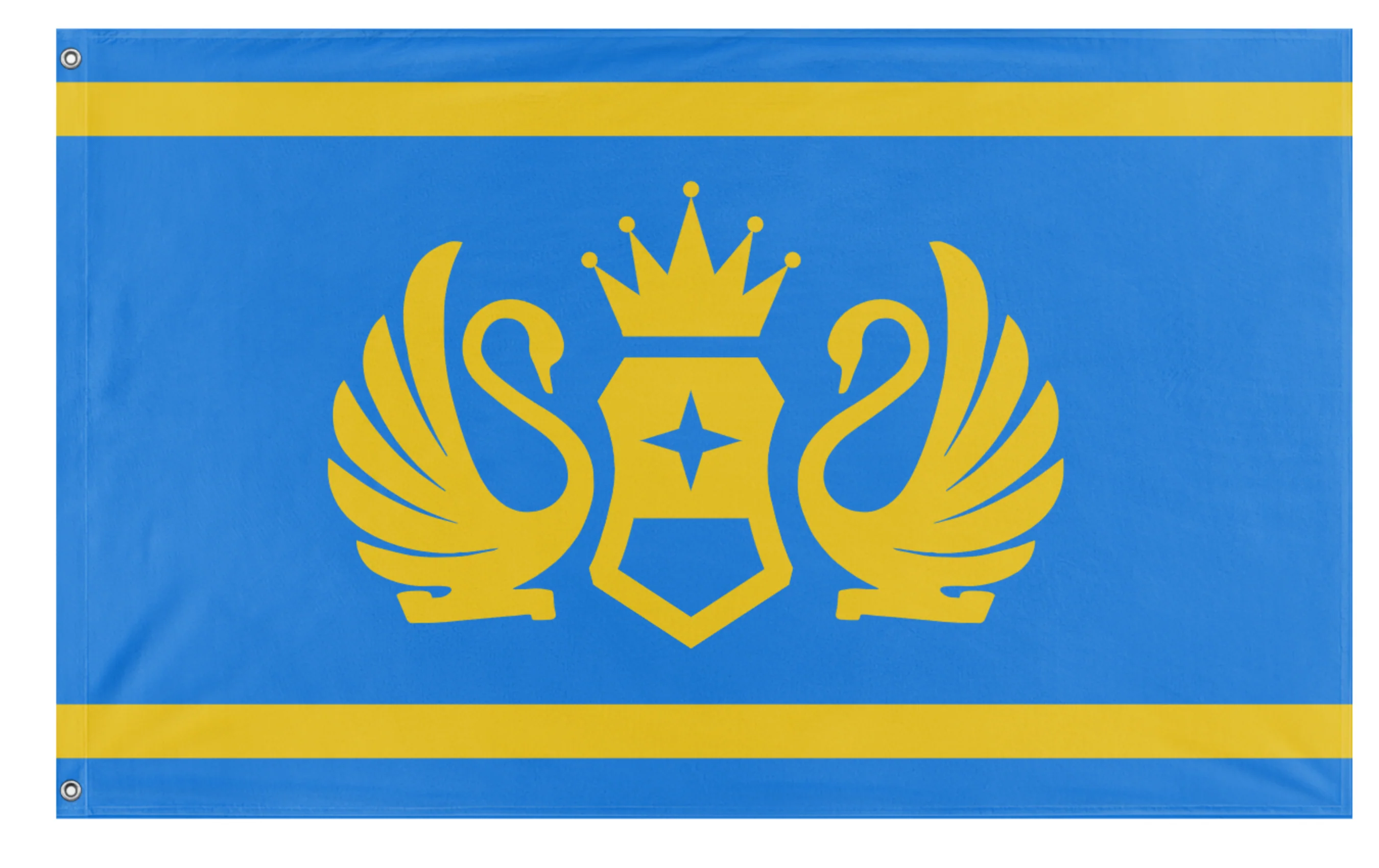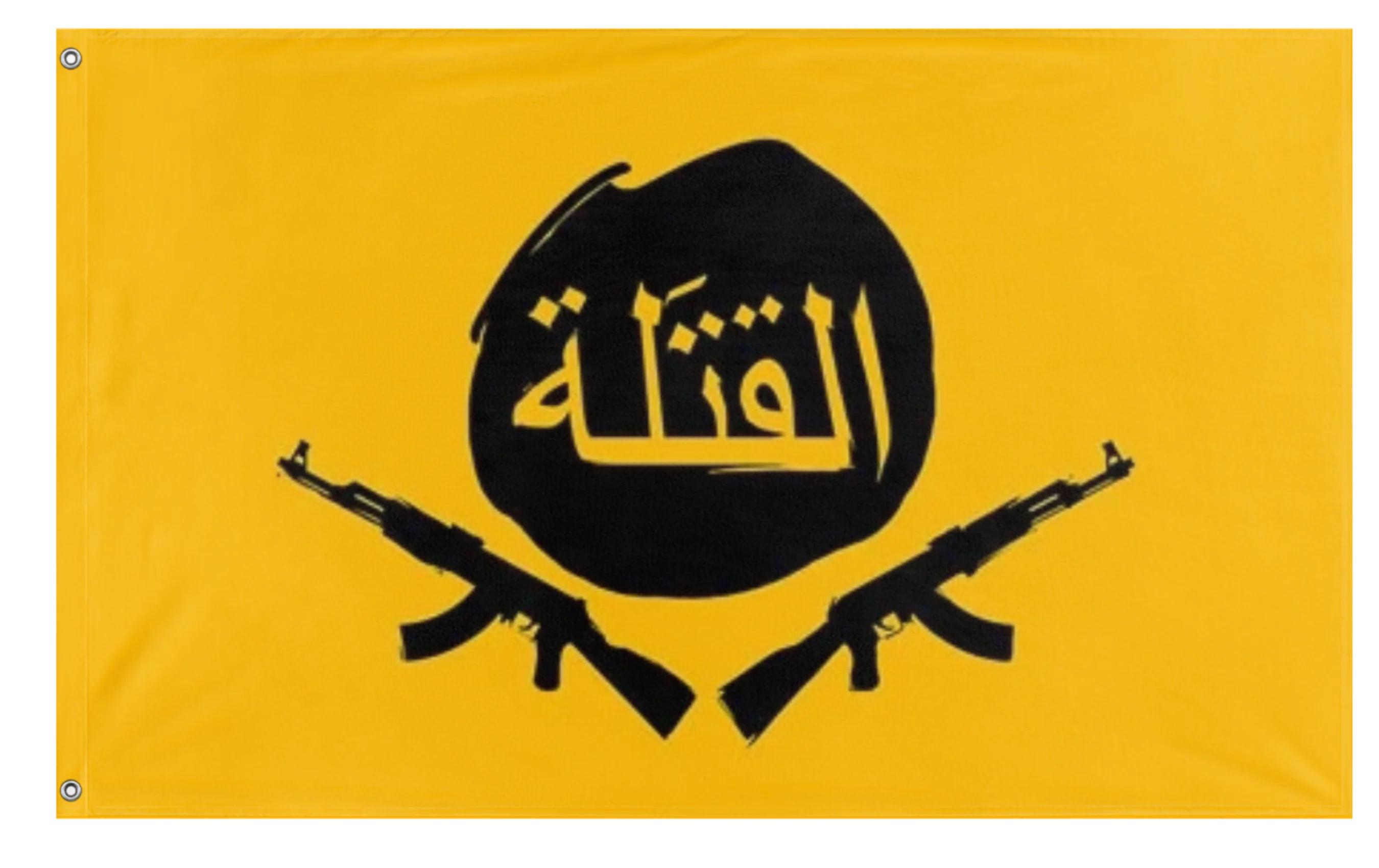
Tartaria flag (More Sizes)
📐 Custom Personalized Flag made with Flagmaker & Print. Learn more about our product line-up on the Product Details page. This custom flag design is available as both a one-sided wall flag, or a double-sided display flag
🎌 All our personalized flags are available in multiple sizes and finishing options . If you have special requests, don't hesitate to reach out to us!
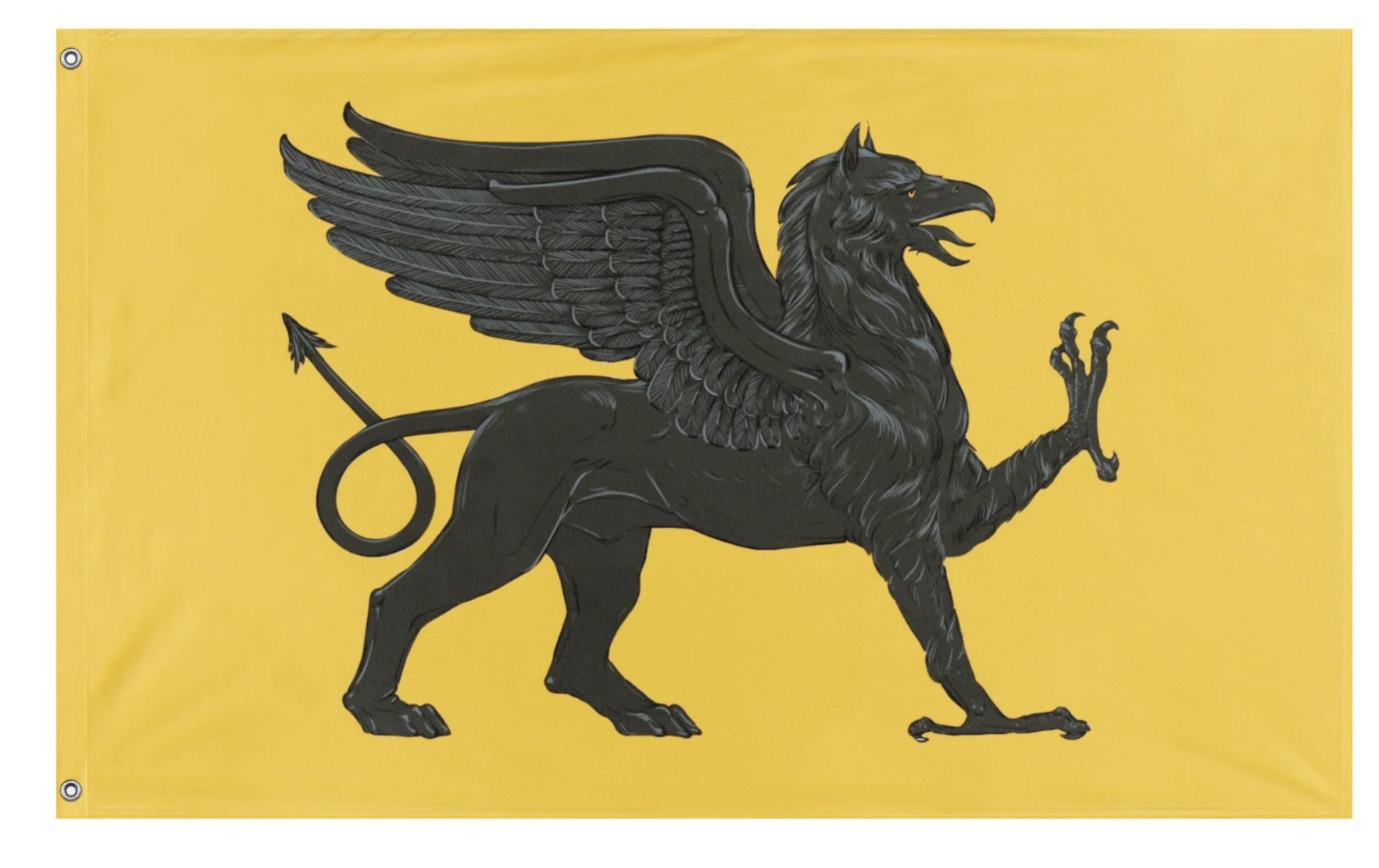
✒️ he image displays a banner of arms associated with the historical and, more prominently, the modern conspiratorial concept of Tartaria (or Great Tartary). The flag features a vibrant yellow (or gold) field upon which is placed a large, imposing black gryphon (or griffin) passant (walking with the right foreleg raised) with wings slightly elevated and a serpent-like, looped tail ending in an arrow-point. The gryphon, a mythical creature with the body of a lion and the head and wings of an eagle, has historically been a significant heraldic charge across Europe and Asia, particularly associated with the region of Pomerania and, in some historical European maps, with the vague geographical entity of Tartary. This specific design, often linked to speculative historical interpretations, has gained widespread recognition and adoption within the Tartarian Empire conspiracy theory, which posits the existence of a vast, technologically advanced global empire erased from conventional history. Historically, Tartary was a broad, archaic geographical term used in European literature and cartography from the 13th to the 19th centuries to denote the vast, poorly-understood regions of Central Asia, Siberia, and sometimes Manchuria, inhabited by various Turkic and Mongol peoples (collectively referred to as "Tartars" or "Tatars"). While no unified, centralized state named "Tartaria" ever existed, the heraldic device of a black gryphon on a gold field does appear in European sources, such as Karl Alyard's 1705 flag book, often labeled as the flag of Tartary. Today, the banner functions primarily as an emblem for the pseudohistorical theory that claims this flag represents a suppressed, pre-industrial global civilization, leveraging the historical cartographical term for contemporary cultural and political narratives.
Original: $8,200.00
-70%$8,200.00
$2,460.00Product Information
Product Information
Shipping & Returns
Shipping & Returns
Description
📐 Custom Personalized Flag made with Flagmaker & Print. Learn more about our product line-up on the Product Details page. This custom flag design is available as both a one-sided wall flag, or a double-sided display flag
🎌 All our personalized flags are available in multiple sizes and finishing options . If you have special requests, don't hesitate to reach out to us!
✒️ he image displays a banner of arms associated with the historical and, more prominently, the modern conspiratorial concept of Tartaria (or Great Tartary). The flag features a vibrant yellow (or gold) field upon which is placed a large, imposing black gryphon (or griffin) passant (walking with the right foreleg raised) with wings slightly elevated and a serpent-like, looped tail ending in an arrow-point. The gryphon, a mythical creature with the body of a lion and the head and wings of an eagle, has historically been a significant heraldic charge across Europe and Asia, particularly associated with the region of Pomerania and, in some historical European maps, with the vague geographical entity of Tartary. This specific design, often linked to speculative historical interpretations, has gained widespread recognition and adoption within the Tartarian Empire conspiracy theory, which posits the existence of a vast, technologically advanced global empire erased from conventional history. Historically, Tartary was a broad, archaic geographical term used in European literature and cartography from the 13th to the 19th centuries to denote the vast, poorly-understood regions of Central Asia, Siberia, and sometimes Manchuria, inhabited by various Turkic and Mongol peoples (collectively referred to as "Tartars" or "Tatars"). While no unified, centralized state named "Tartaria" ever existed, the heraldic device of a black gryphon on a gold field does appear in European sources, such as Karl Alyard's 1705 flag book, often labeled as the flag of Tartary. Today, the banner functions primarily as an emblem for the pseudohistorical theory that claims this flag represents a suppressed, pre-industrial global civilization, leveraging the historical cartographical term for contemporary cultural and political narratives.