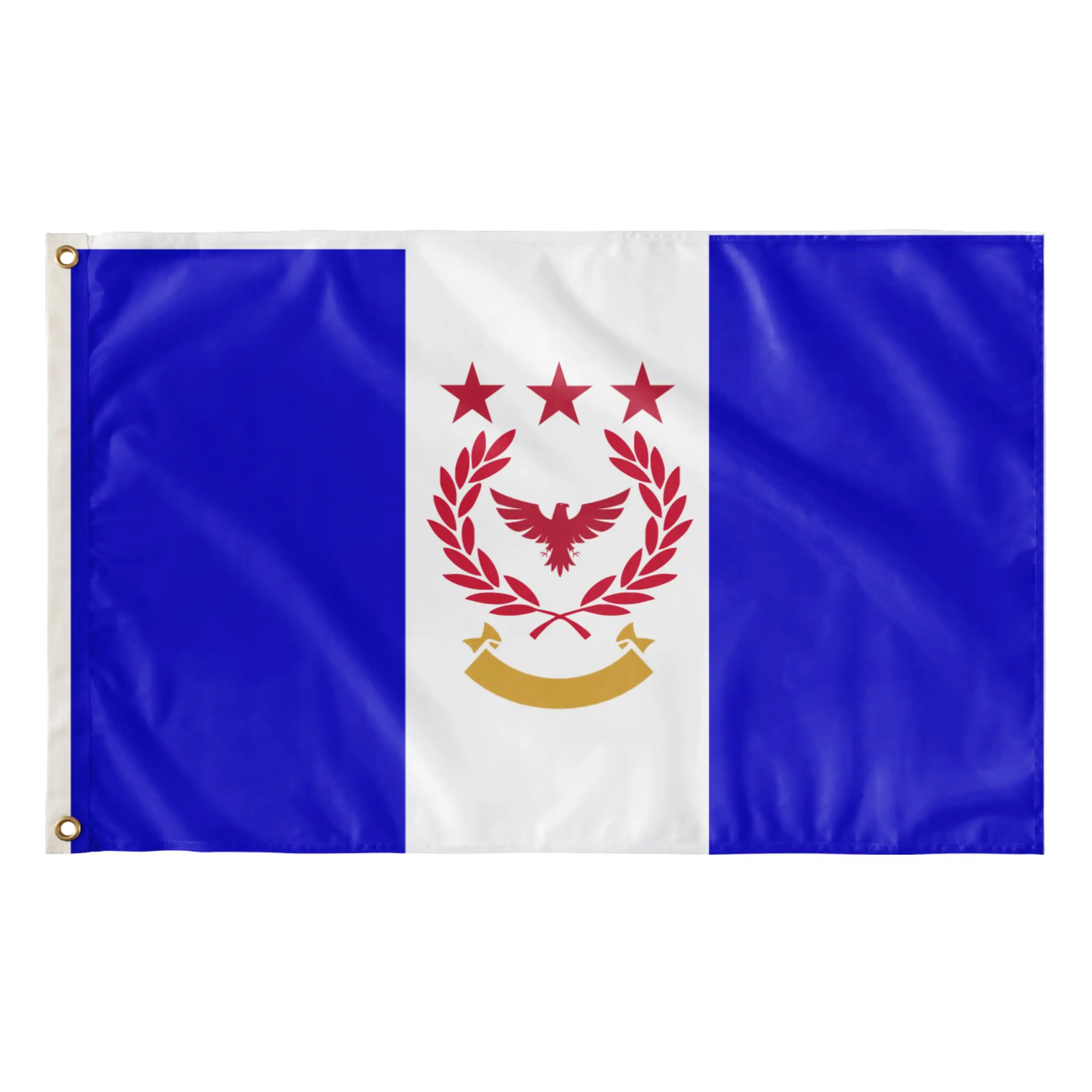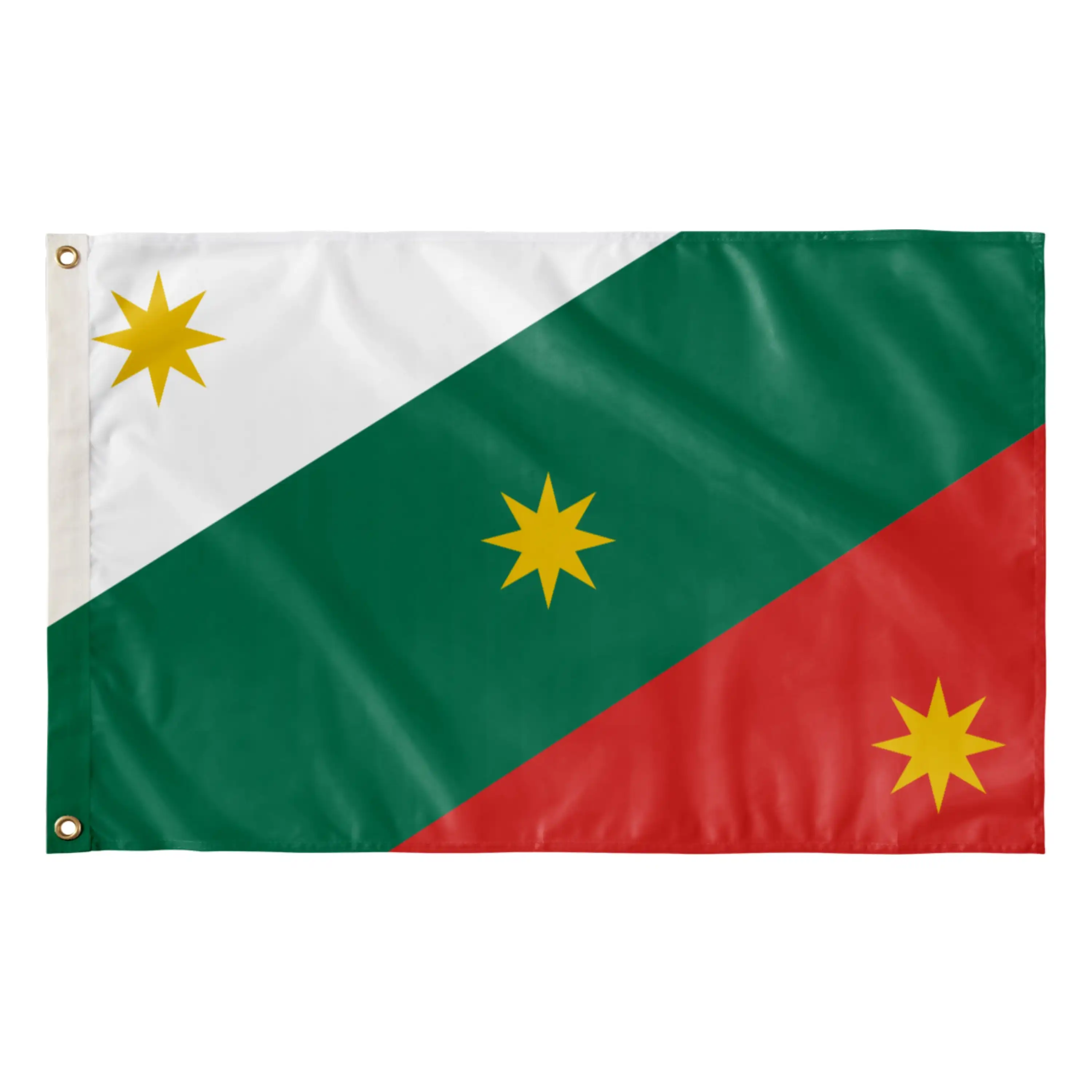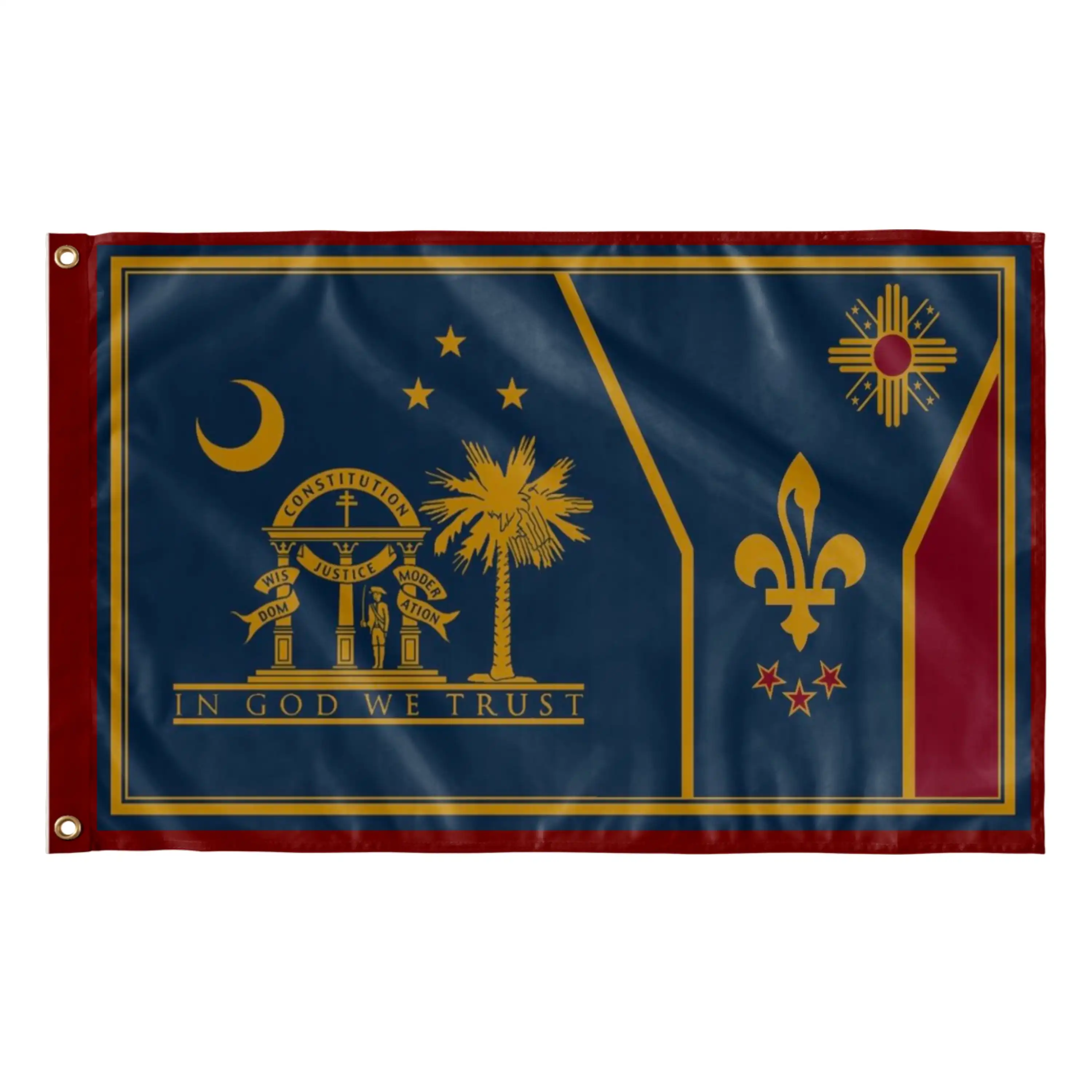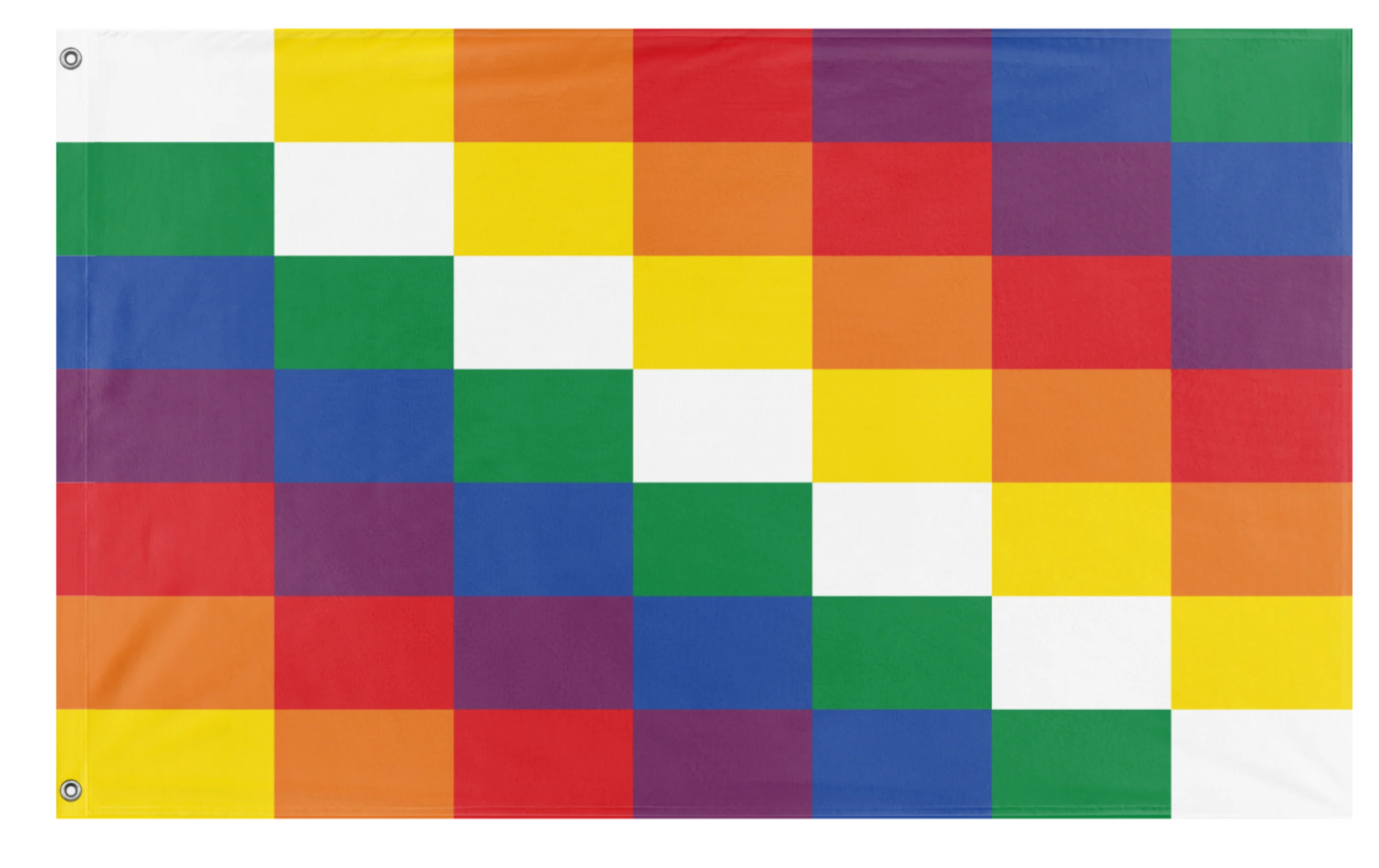
Indigenous People of South America Flag (UN)
📐 Custom Personalized Flag made with Flagmaker & Print. Learn more about our product line-up on the Product Details page. This custom flag design is available as both a one-sided wall flag, or a double-sided display flag
🎌 All our personalized flags are available in multiple sizes and finishing options . If you have special requests, don't hesitate to reach out to us!
✒️ The Wiphala is a square emblem commonly used as a flag to represent some native peoples of the Andes, including those in present-day Bolivia, Peru, Chile, Ecuador, northwestern Argentina, and southern Colombia. Composed of a 7x7 square patchwork in seven colors, arranged diagonally, the Wiphala's precise configuration varies depending on the specific suyu (region) of the Inca Empire it represents. While often associated with the Inca, its design is thought to predate the empire, with the oldest surviving example dating back to the Tiwanaku culture (1580 BC – AD 1187). Each of the seven colors holds distinct meanings, reflecting the diverse cultures, landscapes, and philosophical principles of the Andean peoples. Since 2009, the Qullasuyu Wiphala has been recognized as a national symbol of Bolivia, alongside its main flag, and it has gained prominence as a symbol of indigenous identity, unity, and resistance in social movements across the region.
Original: $53.00
-70%$53.00
$15.90Product Information
Product Information
Shipping & Returns
Shipping & Returns
Description
📐 Custom Personalized Flag made with Flagmaker & Print. Learn more about our product line-up on the Product Details page. This custom flag design is available as both a one-sided wall flag, or a double-sided display flag
🎌 All our personalized flags are available in multiple sizes and finishing options . If you have special requests, don't hesitate to reach out to us!
✒️ The Wiphala is a square emblem commonly used as a flag to represent some native peoples of the Andes, including those in present-day Bolivia, Peru, Chile, Ecuador, northwestern Argentina, and southern Colombia. Composed of a 7x7 square patchwork in seven colors, arranged diagonally, the Wiphala's precise configuration varies depending on the specific suyu (region) of the Inca Empire it represents. While often associated with the Inca, its design is thought to predate the empire, with the oldest surviving example dating back to the Tiwanaku culture (1580 BC – AD 1187). Each of the seven colors holds distinct meanings, reflecting the diverse cultures, landscapes, and philosophical principles of the Andean peoples. Since 2009, the Qullasuyu Wiphala has been recognized as a national symbol of Bolivia, alongside its main flag, and it has gained prominence as a symbol of indigenous identity, unity, and resistance in social movements across the region.